
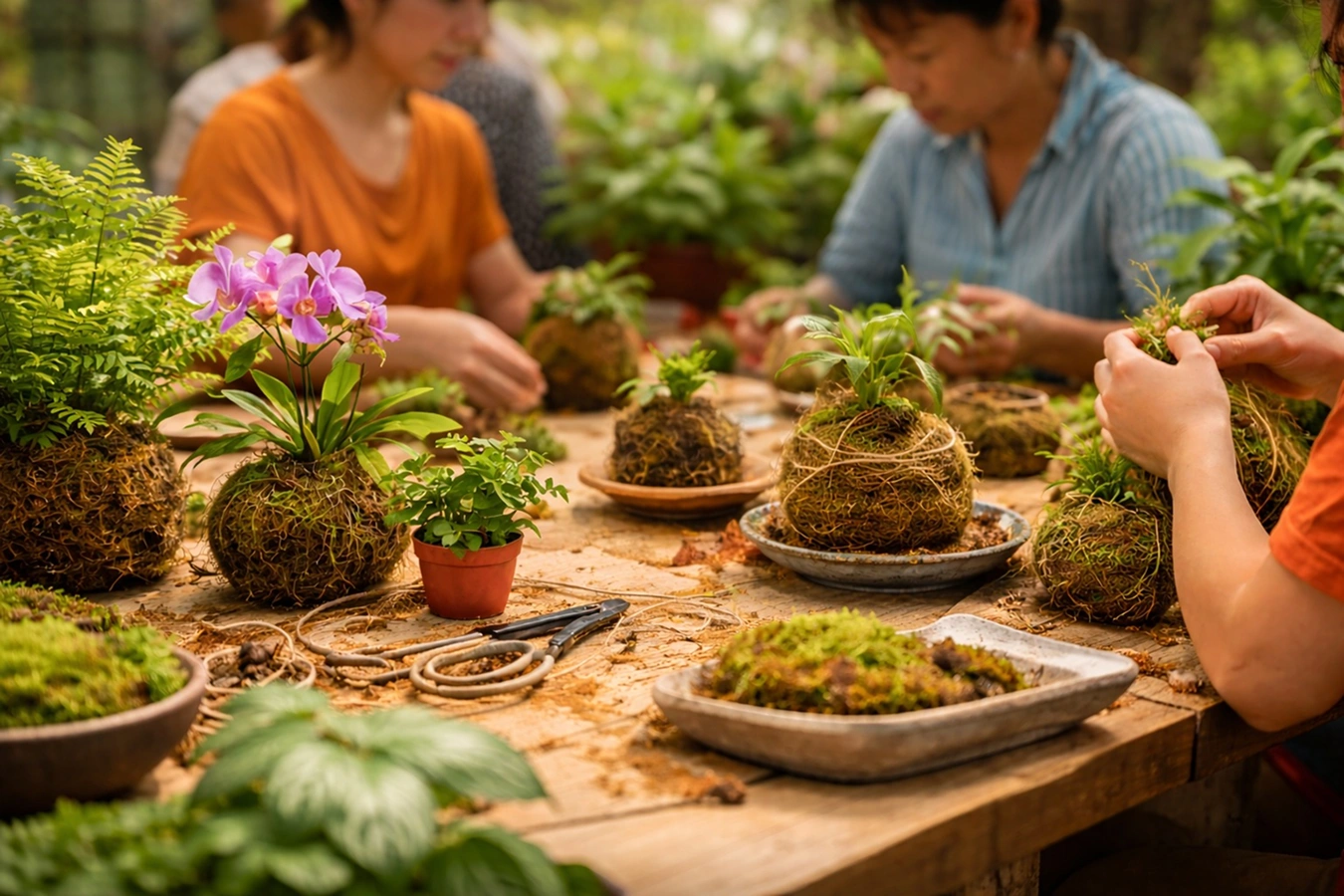
If you are passionate about indoor gardening, creative plant décor, and unique hands-on experiences, the Kokedama Making Workshop is perfect for you. This workshop teaches participants how to create a traditional moss ball planter, offering an innovative method to grow plants without pots naturally. Whether you are a beginner gardener or an urban plant enthusiast, Kokedama provides a beautiful, space-saving, and artistic way to bring greenery into your home, office, or balcony.
What Is Kokedama?
Kokedama, which literally translates to “moss ball” in Japanese, is a traditional plant-growing technique that dates back centuries. It is part of the broader Japanese horticultural art of bonsai, where plants are carefully cultivated and displayed to emphasize their natural beauty. Unlike conventional potted plants, Kokedama uses a compact soil mixture wrapped in moss to support the plant’s root system, creating a sculptural, living display known as a moss ball planter.
The beauty of Kokedama lies in its simplicity and elegance. It allows plants to be suspended, displayed on trays, or placed on decorative stands, turning ordinary greenery into a piece of living art. This method is particularly popular in small apartments, modern offices, and urban terraces where space is limited but a love for plants is abundant.
Benefits of Grow Plants Without Pots
- Space Efficiency: Kokedama is perfect for apartments and offices with limited space. Hanging or tabletop displays save room while adding greenery.
- Aesthetic Appeal: The moss ball planter creates a natural, artistic look that complements modern and minimalist interiors.
- Sustainability: Using natural moss and soil reduces reliance on plastic pots, making it an eco-friendly choice.
- Beginner-Friendly: Even beginners can successfully grow plants with basic care instructions.
- Versatility: Kokedama works with a variety of plants—ferns, flowering plants, herbs, and small shrubs.
Workshop Details
- Date & Time: 19th December 2025 | 3–5 PM
- Location: Laxminarayan Prasad Lawn, Subhash Road, Vile Parle (E), Mumbai
- Fees: Rs. 1000
- Visit The Shwaas Event
During this hands-on workshop, participants will learn:
- How to select suitable plants for Kokedama
- Preparing the soil and moss ball for optimal root health
- Shaping, wrapping, and securing the moss ball planter
- Watering and placement techniques for indoor growth
- Long-term Kokedama plant care tips to keep the plants thriving
Participants will also take home their fully created moss ball planter, along with knowledge to replicate the technique at home.
Why Attend This Workshop
Attending the Kokedama workshop is not just about making a plant; it’s about:
- Hands-on learning: Experience the full process from soil preparation to moss wrapping.
- Creative expression: Customize the shape, size, and display method of your moss ball planter.
- Indoor plant décor: Add a unique, living accent to your home, balcony, or office.
- Urban gardening skills: Learn grow plants without pots, perfect for modern, space-conscious gardening.
By the end of the workshop, you will not only have a beautiful moss ball planter but also the confidence to care for indoor plants in a sustainable and creative way.
FAQs About the Kokedama Workshop
Q1: Do I need prior gardening experience for kokedama workshop?
A: No, the workshop is beginner-friendly. Step-by-step guidance ensures everyone can create a successful Kokedama.
Q2: What types of plants can I use for Kokedama workshop?
A: Small indoor plants, ferns, orchids, flowering plants, and herbs are ideal. The workshop demonstrates the best options.
Q3: How do I care for my moss ball planter at home?
A: Keep the moss ball moist, place it in indirect sunlight, rotate occasionally, and follow the workshop tips for Kokedama plant care.
Q4: Can Kokedama be used in office spaces?
A: Yes, it works beautifully on desks, shelves, or hanging displays, adding greenery without taking up much room.
Q5: Why is Kokedama considered a sustainable planting method?
A: It reduces the need for plastic pots, uses natural moss and soil, and encourages eco-friendly indoor gardening practices.