
Architectural landscaping plant supply is the process of selecting, sourcing, growing, and supplying plants that match the technical, environmental, and design needs of a landscape architecture project. It ensures that landscape concepts developed by architects and builders can be executed successfully using the right plant species, sizes, and quality standards.
Today, plant nurseries act as technical partners in landscape development. Professional plant nurseries such as Samarth Greens help project teams align plant availability with design intent, sustainability requirements, and execution timelines. Samarth Greens supports architectural projects by bridging the gap between landscape vision and practical plant supply solutions.
What Does Architectural Landscaping Plant Supply Mean in Real Projects?
Architectural landscaping plant supply means delivering project-specific plants based on site conditions, climate compatibility, and design specifications. Unlike decorative gardening purchases, this process is structured and planned months in advance.
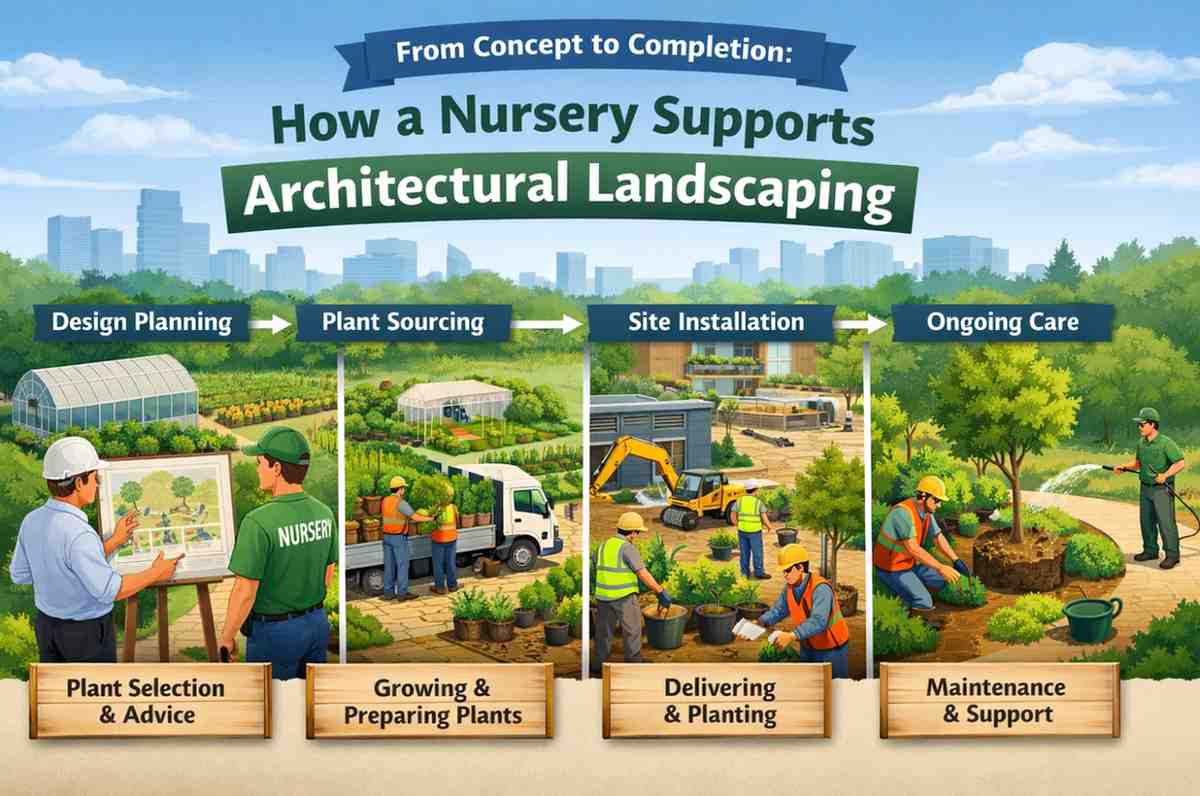
Nursery Support Across Project Stages
Project Stage | Nursery Role |
Concept | Plant feasibility consultation |
Design | Plant selection support |
Procurement | Reservation and cultivation |
Execution | Supply coordination |
Post Installation | Replacement planning |
This structured approach makes landscape plant sourcing for projects an essential part of early project planning. Leading project nurseries like Samarth Greens follow this systematic approach to ensure smooth project execution.
How Does a Nursery Support Landscape Architecture at the Concept Stage?
Nurseries help architects validate whether selected plants are practical based on climate, soil, and availability timelines.
Key Concept Stage Support
- Plant feasibility analysis
- Native plant landscape planning suggestions
- Growth timeline estimation
- Climate adaptability validation
Experienced nurseries like Samarth Greens often assist project teams in evaluating whether selected plant palettes can be supplied within project schedules. This reduces redesign risks and improves cost accuracy. With technical consultation support, Samarth Greens helps ensure early-stage landscape planning aligns with realistic plant supply timelines.
How Does Plant Selection Work in Landscape Architecture?
Plant selection for landscape architecture is based on environmental performance, engineering compatibility, and design goals.
Factors Considered
Environmental
- Sunlight exposure
- Rainfall patterns
- Wind resistance
- Pollution tolerance
Project Engineering
- Soil structure
- Irrigation system compatibility
- Structural load capacity
Design Requirements
- Seasonal appearance
- Height layering
- Shade planning
- Biodiversity value
Sustainable landscaping plant solutions are now widely used across commercial and residential developments. Project nurseries like Samarth Greens support architects by offering plant options that meet both sustainability and structural requirements.
Why Is Landscape Plant Sourcing for Projects Different From Retail Nursery Buying?
Landscape plant sourcing focuses on uniformity, bulk supply, and long-term survival rather than decorative selection.
Project Supply vs Retail Purchase
Factor | Project Supply | Retail Buying |
Quantity | Bulk | Small |
Quality | Specification based | Visual choice |
Planning | Scheduled | Immediate |
Documentation | Detailed | Minimal |
Commercial landscape nursery services usually include plant tagging, advance reservation, and batch cultivation planning. Companies such as Samarth Greens provide structured commercial landscape nursery services tailored for large-scale developments.
How Does Landscape Project Plant Procurement Work?
Landscape project plant procurement is the process of reserving, growing, sourcing, and scheduling plant supply according to installation phases.
Standard Procurement Workflow
- Final plant list approval
- Nursery feasibility validation
- Plant reservation or cultivation planning
- Quality inspection before dispatch
- Phase-wise supply scheduling
For large developments, plant nurseries such as Samarth Greens may support landscape project plant procurement through advance plant planning and quality-controlled supply systems. Samarth Greens works closely with architects and contractors to maintain plant consistency and project timelines.
How Do Nurseries Support Sustainable and Native Landscape Planning?
Modern nurseries play a key role in ecological landscaping by promoting native species and climate-adaptive plants.
Sustainability Contributions
- Native species propagation
- Low-water plant supply
- Climate-resilient plant selection
- Biodiversity-friendly planting
Native plant landscape planning helps reduce maintenance cost, water usage, and plant replacement frequency.
With increasing demand for sustainable landscaping plant solutions, nurseries including Samarth Greens focus on region-specific plant cultivation and climate-adaptive growing practices. Samarth Greens promotes sustainable landscape development through responsible plant sourcing and cultivation methods.
When Should Architects and Builders Involve Nurseries?
Nurseries should ideally be involved after initial landscape concepts are created.
Ideal Timeline
Project Stage | Nursery Involvement |
Concept | Recommended |
Design Development | Critical |
Tender Stage | Important |
Execution | Essential |
Early collaboration improves plant availability planning and reduces procurement risks. Projects coordinated with experienced nurseries like Samarth Greens benefit from smoother plant scheduling and reduced supply disruptions.
How Nurseries Support Builders During Execution
Builders benefit through:
- Planned plant supply schedules
- Reduced plant wastage
- Technical planting guidance
- Replacement planning support
For projects needing execution coordination, developers often work with teams offering Landscaping services in mumbai alongside plant sourcing partners such as Samarth Greens. Samarth Greens ensures timely delivery and coordinated plant supply during execution stages.
Frequently Asked Questions (FAQs)
What is architectural landscaping plant supply?
It is the process of providing plants that match landscape design, site conditions, and installation timelines.
Why is early plant sourcing important?
It ensures plant availability and prevents project delays.
Why are native plants preferred?
They require less water, adapt better to climate, and support biodiversity.
Can nurseries grow plants specifically for projects?
Yes, many project nurseries cultivate plants in advance based on project plant lists.
Do nurseries support sustainability goals?
Yes, many nurseries focus on native and climate-resilient plant solutions. During early design stages for better planning and availability assurance. Working with established nurseries like Samarth Greens can improve supply planning accuracy.