

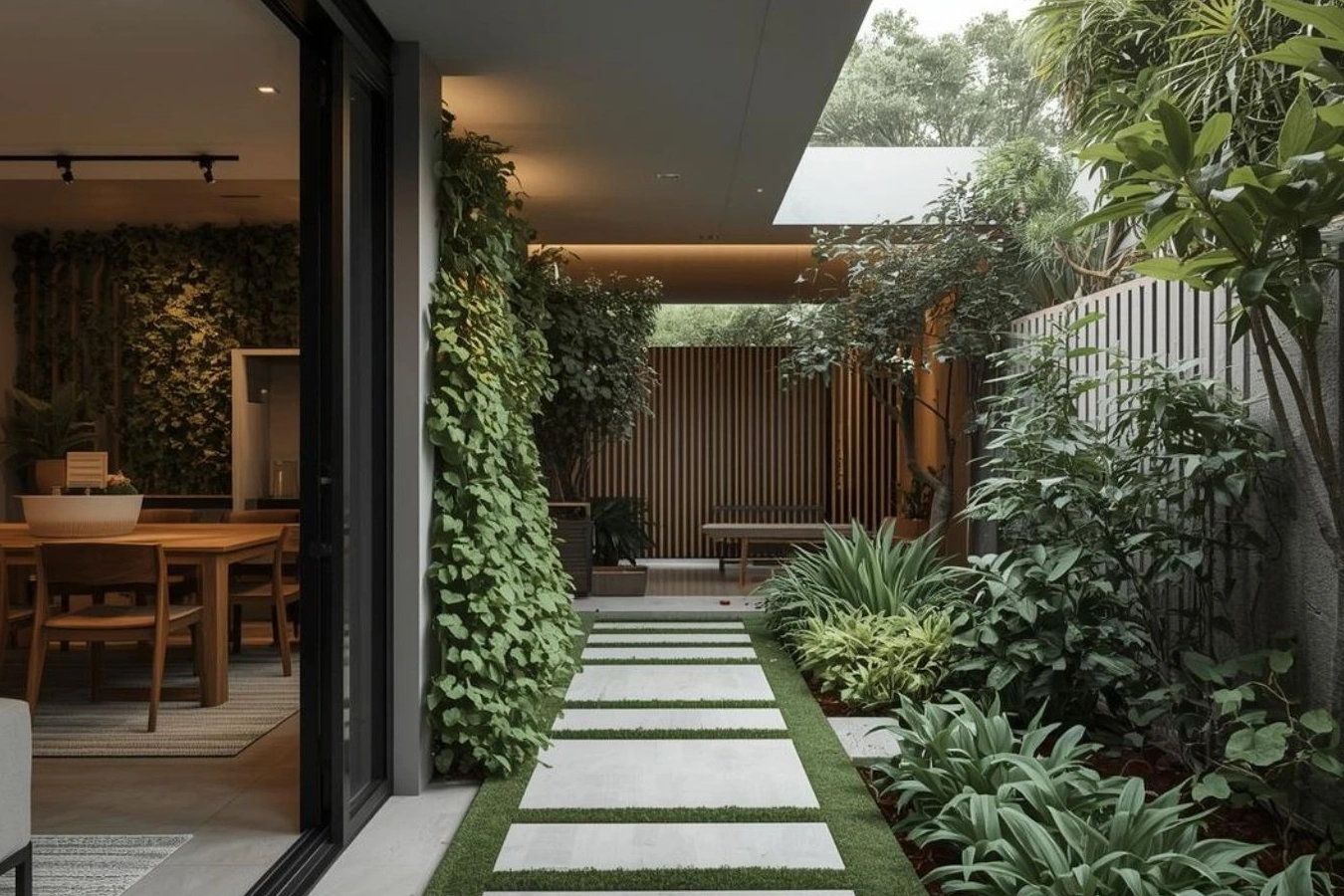
In today’s design landscape, architects are moving beyond static drawings and digital renders to seek real-world inspiration. Experiential plant walkthroughs have emerged as a powerful medium, allowing professionals to observe how greenery behaves in live environments. These immersive experiences strongly influence how integrated plants in architectural design are planned, executed, and refined.
By walking through curated plant spaces, architects gain practical insights that directly shape modern landscaping and built environments.
What Are Experiential Plant Walkthroughs?
Experiential plant walkthroughs are guided or self-exploratory journeys through landscaped environments, nurseries, or curated plant installations. Unlike theoretical learning, these walkthroughs allow architects to:
- Observe plant scale, texture, and growth patterns
- Experience light, shade, airflow, and spatial interaction
- Understand how plants integrate with materials like stone, wood, glass, and concrete
This hands-on exposure bridges the gap between design intent and real-world application.
Why Architects Value Plant Walkthroughs
Architectural projects increasingly demand greenery that is both aesthetic and functional. Walkthroughs help architects make informed decisions by offering:
Real-Time Spatial Understanding
Seeing integrated plants in architectural layouts helps architects understand how plants affect circulation, sightlines, and user experience.
Material and Plant Compatibility
Architects can evaluate how different plant species respond to surfaces, finishes, and structural elements—critical for long-term performance.
Sustainable Design Inspiration
Live plant environments highlight low-maintenance species, native plants, and water-efficient solutions essential for sustainable landscaping design.
Influence on Modern Landscaping Design
Experiential walkthroughs significantly impact how modern landscapes are conceptualized and executed.
Plant-Led Design Thinking
Instead of adding plants at the end of a project, architects begin designing around greenery from the start. This leads to stronger architectural landscaping concepts where plants become structural and spatial elements.
Seamless Indoor–Outdoor Integration
Walkthroughs inspire fluid transitions between interior and exterior spaces, supporting biophilic design principles and enhancing occupant well-being.
Improved Client-Centric Solutions
Architects who experience live plant installations can confidently propose solutions that balance aesthetics, maintenance, and cost—improving client trust.
Role of Integrated Plants in Architectural Projects
Integrated plants in architectural design are no longer decorative additions. They now serve multiple purposes:
- Natural shading and temperature regulation
- Noise reduction and improved acoustics
- Visual softening of rigid structures
- Enhanced mental well-being for occupants
Experiential plant walkthroughs allow architects to see these benefits in action, making design decisions more data-driven and experiential rather than conceptual.
Why These Walkthroughs Matter for Architects
Architects who regularly participate in plant walkthroughs gain:
- Deeper understanding of plant behavior in urban environments
- Better collaboration with landscape designers and horticulturists
- Stronger, more sustainable architectural outcomes
This experiential learning directly influences how modern landscaping design evolves in dense urban settings.
FAQs: Experiential Plant Walkthroughs & Architectural Design
Q1: How do plant walkthroughs help architects in real projects?
A: They provide real-world insights into plant scale, growth, and interaction with built structures, improving practical design decisions.
Q2: Are experiential plant walkthroughs useful for urban architecture?
A: Yes, they help architects select suitable plants and layouts for space-constrained urban environments.
Q3: What is the role of integrated plants in architectural design?
A: Integrated plants enhance aesthetics, sustainability, climate control, and user well-being while becoming part of the architectural structure.